
OMAN - BEAUTY HAS AN ADDRESS
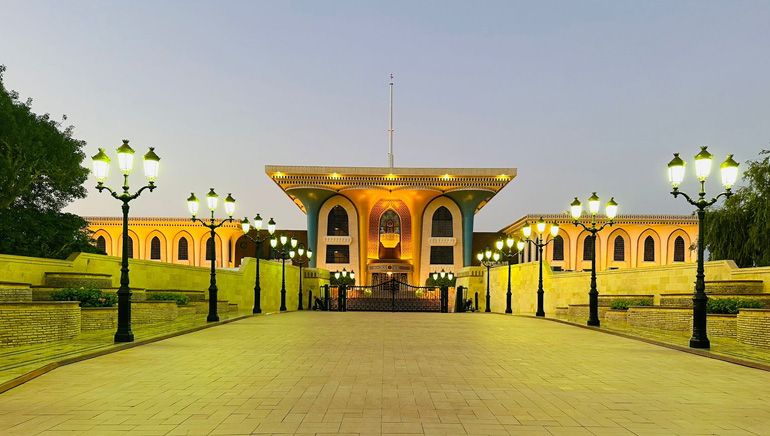
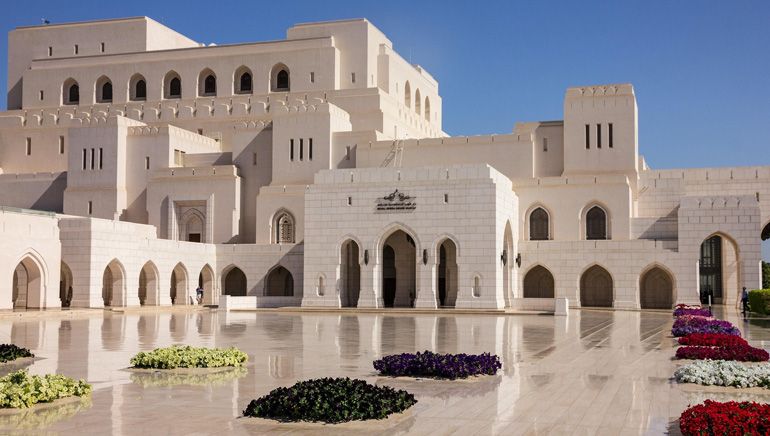
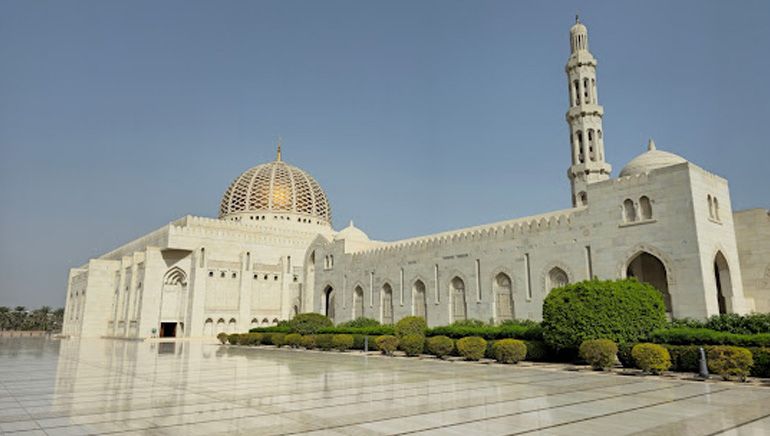
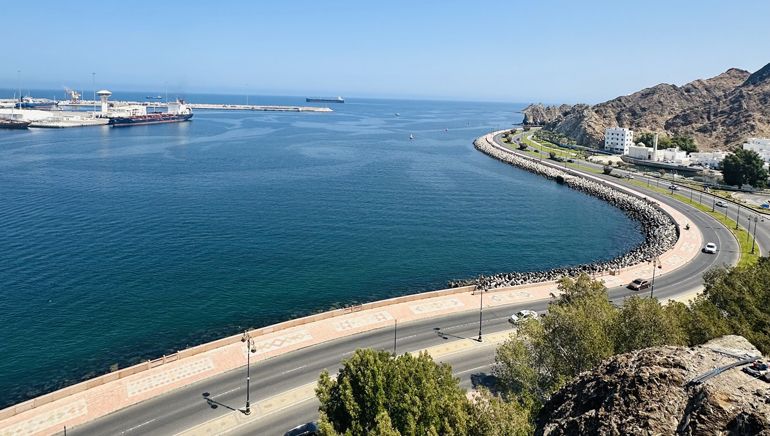
The Sultanate of Oman is a land of scenic plains, wadis, mountains, pristine beaches and golden deserts that occupies a strategic location in the Gulf, and extends from the Musandam in the North, to the lush greenery of Dhofar in the South. Situated in the South- East of the Arabian Peninsula, Oman boasts of a coastline that runs from the Arabian Sea to the entrance of the Indian Ocean where it overlooks the Strait of Hormuz. Oman shares its borders with the Republic of Yemen, the Kingdom of Saudi Arabia, and the United Arab Emirates.
The climate of Muscat is predominantly hot with long, arid summers and warm winters, while the Dhofar region enjoys mild weather all year round. The ideal time to visit Oman is between October and April when temperatures range from 25˚C to 35˚C during the day, to 17˚C to 19˚C in the evenings.
The Sultanate of Oman is an Islamic country and a certain dress code should be observed with sensitivity. Men should wear long trousers and shirts in public places, while women should have their shoulders and knees covered. Loose cotton garments are ideal throughout the year, although a light jacket/ sweater or a shawl may be needed for cooler evenings. Tourist photography is allowed in all places, however taking pictures of the local people without their permission is not permitted.
Being a country that is rich in natural diversity and graced by a terrain of mountains, gorges, deserts, and azure seas, the Sultanate is a dream come true for the outdoor enthusiast. With activities that range from diving and photography to rock climbing and camel racing, Oman offers a bit of everything for every visitor.

A History of Oman
Oman has a rich history dating back 100,000 years.
Oman is the oldest independent state in the Arab world. By the 18th century, the Omani Empire stretched from present day Oman down the east coast of Africa. A new era began in 1970 when Sultan Qaboos bin Said changed the name of the country from the Sultanate of Muscat and Oman to simply Oman.
Oman before Islam
Archaeological evidence has suggested an industrial presence around Aybut Al Auwal dating to around 100,000 years ago. Oman is also the location of one of the world’s earliest inhabited cities at Al Wattih, which dates back 10,000 years. Until the coming of Islam in the 7th century, Oman was dominated by the Assyrians, Babylonians and Persians. Each sought to use Oman’s strategic location for trade with the wider world.
The Coming of Islam
As Islam expanded during the 7th century, Oman entered the faith freely, which led the Prophet Muhammad to state that, ‘God’s mercy be on the people of Al Ghubaira (the people of Oman)…They have believed in me although they had not seen me.’ Over the coming centuries rule in Oman divided amongst a variety of dynasties, imamates, and foreign powers. In 1154, the Nabhani dynasty came to power and ruled Oman until 1470.
Oman and the Portuguese
Portugal dominated the region around Muscat between 1507 and 1650, due to Oman’s strategically important position on trade routes to the east. The Ottoman Empire occupied Muscat between 1581 and 1888. Neither the Portuguese nor the Ottomans, however, controlled Oman in its entirety. By the mid-17th century, Omani tribes under the Imam’s leadership drove the Portuguese out of Muscat.
The Omani Empire
In the late 17th century, the Imam of Oman, Saif bin Sultan, began a process of expansion down the east coast of Africa. In 1749, the current Al Said dynasty came to power in Oman after driving out the Persians who invaded in 1737. In 1783, the Omani Empire expanded to Gwadar in present day Pakistan. Oman became a powerful regional trading power based on maritime trade.
Oman and the British Empire
In 1798, Oman and Great Britain signed a Treaty of Friendship. Under this treaty, Britain guaranteed the Sultan’s rule. A succession crisis in 1856, however, saw the Omani Empire divided into the Sultanate of Oman and Muscat and the Sultanate of Zanzibar. In 1891, Oman and Muscat became a British Protectorate. For much of this period, the Sultan controlled the coast around Muscat while the Imam governed the interior from Nizwa. Under the 1951 Treaty of Friendship, Commerce and Navigation, Oman received independence from Britain.
Modern Oman
Sultan Qaboos ascended to the throne on 23 July 1970. Since this time, Oman has emerged as a prosperous and modern nation. Sultan Qaboos has balanced tribal, regional and ethnic division and improved his people’s quality of living. In 1996, Sultan Qaboos introduced the ‘Basic Statutes of the States’, Oman’s first written constitution, which guarantees rights within the framework of Qur’anic and customary law.